Financial services firm AnandRathi analysed the key points of the policy soon after it was announced.
The key short-term lending rate (repo rate)has been hiked by 0.25 pc to 7.50 pc.

Public sector banks have already begun slashing their prime lending rates while some in the private sector space have so far refrained from doing so. "Private sector banks will (now) have to reduce their rates," Prime Minister's Economic Advisory panel chief Suresh Tendulkar said. "Banks are well-capitalised but the current problem is that they are unwilling to lend."
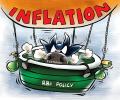
The RBI on Friday retained inflation forecast for FY23 at 6.7 per cent amid uncertain price trajectory on "geopolitical shocks" and on hope that inflationary pressures would ease with pick-up in kharif sowing and supply chain improvements. In its previous monetary policy review in June, it had projected retail inflation for 2022-23 at 6.7 per cent, higher from 5.7 per cent forecast in April. The six-member Monetary Policy Committee (MPC) unanimously decided to raise the benchmark repo rate by a steep 50 basis points to 5.40 per cent with immediate effect to tame inflation while supporting growth.
Part of a focus on retail advances, as corporate demand remains subdued; could reverse if RBI raises repo next month

The lender, however, is not likely to reduce its base rate to which all loan rates are linked.

Endorsing Finance Minister P Chidambaram's call to banks to pass on the benefit of rate cuts to customers, RBI Governor D Subbarao on Thursday said the central bank is also "very conscious" of the need to be supportive of economic growth.
"There is plenty of liquidity in the system and we want to assure that it will be maintained," RBI deputy governor Usha Thorat said, when asked by reporters if the central bank would change its monetary policy in view of the falling rates.

RBI likely to cut rate early next year.
Bankers and other stakeholders are now almost certain that the Reserve Bank of India (RBI) will increase the key policy rate, or the repo rate, by 25 basis points (bps) on Tuesday.

Short-term lending (Repo) rate is unchanged at 8 per cent.

RBI on Tuesday raised the repo rate, at which banks borrow from the central bank, by 50 basis points to 7.25 per cent, thereby making funds costlier for banks.

The returns from liquid funds, currently, look better than what savings accounts of leading banks are offering, points out Sarbajeet K Sen.
RBI cut the repo rate - the rate at which the central bank lends to banks in exchange for government securities for a period ranging from one to three days -by one percentage point after a gap of four years. This move was preceded by RBI reducing the cash reserve ratio - the money that banks keep with central bank - by 250 basis points (one basis point is one-hundredth of a percentage point).
He said despite liquidity injection by RBI, borrowers should not expect reduction in interest rates for short- and medium-term loans. He, however, added that the measures announced by the government and RBI have starting yielding results.
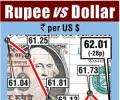
The RBI is widely expected to raise its key repo rate by 25 basis points to 8.00 per cent on Wednesday, its third such hike in four months after recent data showed both wholesale and retail inflation at multi-month highs.

Only one 25 basis points rate cut is likely this calendar year, between April and June, the poll says

On the reduction in the SLR ratio, he said it was a signal from the point of view of long-term reforms.
The RBI policy has certainly become more transparent as it has fulfilled market expectations of 25 bps hike in repo and 25 bps cut in MSF.
The Reserve Bank on Wednesday cut the repo and reverse repo rates by 50 basis points each with immediate effect.
The transmission of the last cash reserve ratio cut has also not happened fully because that came in March.

With this lending rate reduction, the bank has lowered 40 bps so far this fiscal year in five successive rate cuts beginning April.
The Reserve Bank of India said it would attempt to bring down inflation from 11-12 per cent to 7 per cent by March, 2009.

India Inc has pitched for rate cut to boost economic activities.

The Central bank primarily factors Consumer Price Index while deciding on policy rate.
The government has taken on more and more debt to finance the deficit and more debt also means more interest.

Das said banks have passed only 0.29 per cent in rate cuts to their borrowers as against 0.75 per cent cuts in interest rates by the Reserve Bank till June.

RBI in wait and watch mode as several risks to inflation continue to exist including a sudden reversal of food prices and oil price volatility.

The Reserve Bank of India (RBI) on Friday said it will maintain comfortable liquidity conditions and conduct market operations in the form of outright and special open market operations. It will conduct on tap targeted long-term repo operations (TLTRO) with tenors of up to three years for a total amount of up to Rs 1 lakh crore at a floating rate linked to the policy repo rate.

Leading economists said on Tuesday the Reserve Bank of India decision to keep the key policy rates unchanged was on expected lines and expressed hope that with inflation now treading down it would change its policy stance by next month.

While the IT stocks traded firm since the start of the day, the BSE IT index soared to a 10-year high.

The six-member monetary policy committee voted 5:1 for the decision, with only Ravindra Dholakia voting for a 0.25 per cent reduction in rates.

Amid prolonged uncertainty, continued policy support will be crucial for sustained economic recovery from the coronavirus pandemic, Reserve Bank Governor Shaktikanta Das said at the recent meeting of the Monetary Policy Committee. "In this period of prolonged uncertainty, it would be wise to remain agile and respond in a gradual, calibrated and well telegraphed manner to the emerging challenges," opined Das, according to the minutes of the MPC meeting released by the Reserve Bank on Thursday. Observing that economic recovery from the pandemic remains incomplete and uneven, he said, "continued support from various policies remains crucial for a sustained recovery." The governor said the renewed surge in international crude oil prices, however, requires close monitoring.

Reserve Bank Governor Shaktikanta Das on Friday said the rupee is holding up relatively well when compared to the currencies of emerging market peers and advanced economies. Days after the domestic currency breached the 80-level against the dollar, Das said Reserve Bank of India (RBI) has zero tolerance for volatile and bumpy movement in the rupee and added that the central bank actions have helped in smoother movement. He said RBI has been supplying US dollars to the market to ensure adequate supply of liquidity and also clarified that the central bank does not target a particular level for the currency.

Some see CRR cut as tight liquidity continues.

This is the fourth consecutive time that the RBI has kept key interest rates unchanged despite clamours from the industry to cut rates to boost economy.
Real estate companies expressed disappointment over the RBI's decision to hike the short-term lending rate, saying this could hurt economic growth and adversely impact property demand in the ongoing festival season.
